How many Bitcoin ATMs are there in the world?
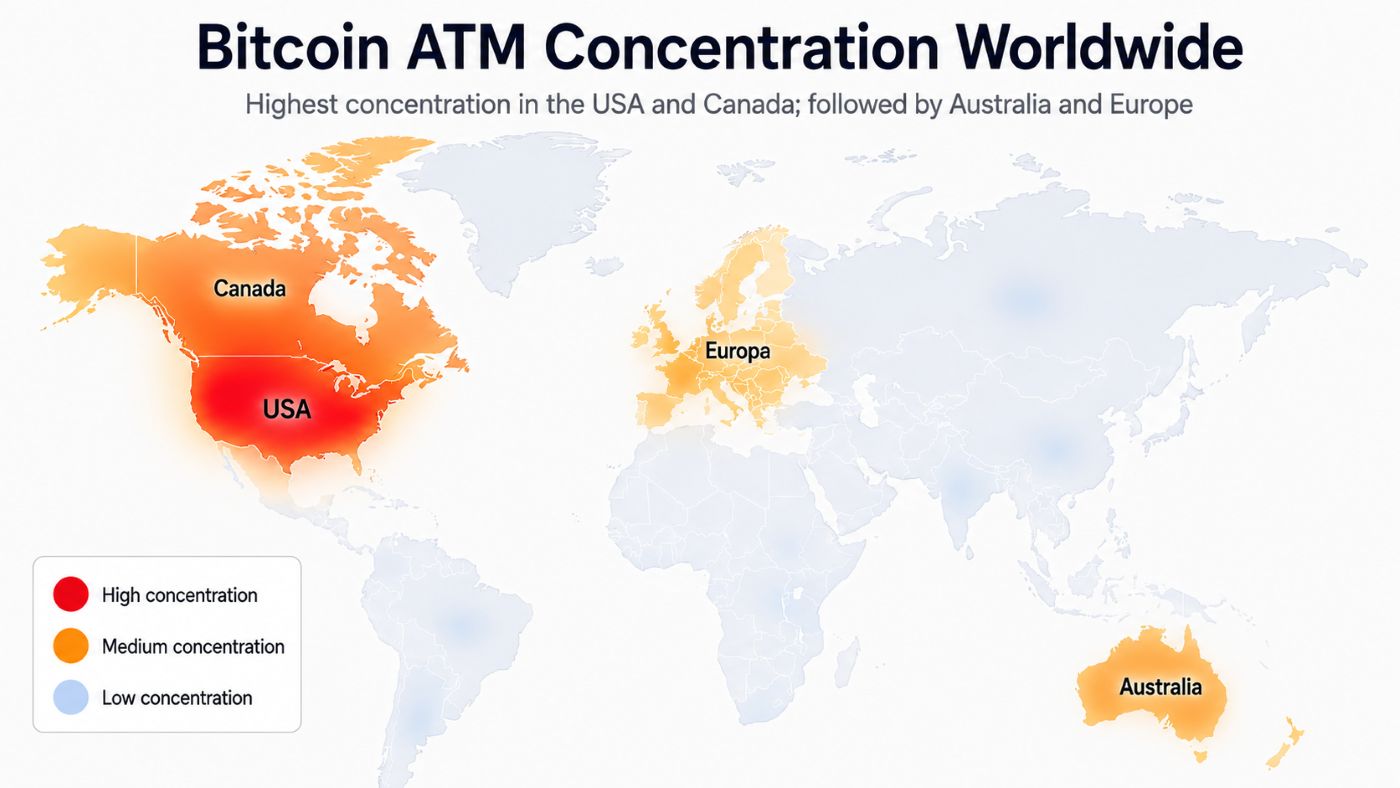
As of July 9, 2026, around 28,300 Bitcoin ATMs are operating worldwide. These cryptocurrency ATMs allow users to buy Bitcoin and, at some locations, sell it as well. According to Finbold data based on Coin ATM Radar, the number of machines fell from 39,158 at the end of 2025 to 28,322 on June 30, 2026. This means earlier estimates of more than 38,000 are no longer current.
Why Do Bitcoin ATM Counts Differ Between Sources?
Variations in the statistics are normal because different platforms may count different types of machines: only active Bitcoin ATMs, all cryptocurrency ATMs, or locations reported by operators that may not yet be operational. Data may also be updated with a delay, as operators install new machines, close less profitable locations, and update their networks at different rates. For this reason, this article presents figures as of July 9, 2026, based on the latest available Coin ATM Radar data and Finbold analysis.
Countries with the Most Bitcoin ATMs
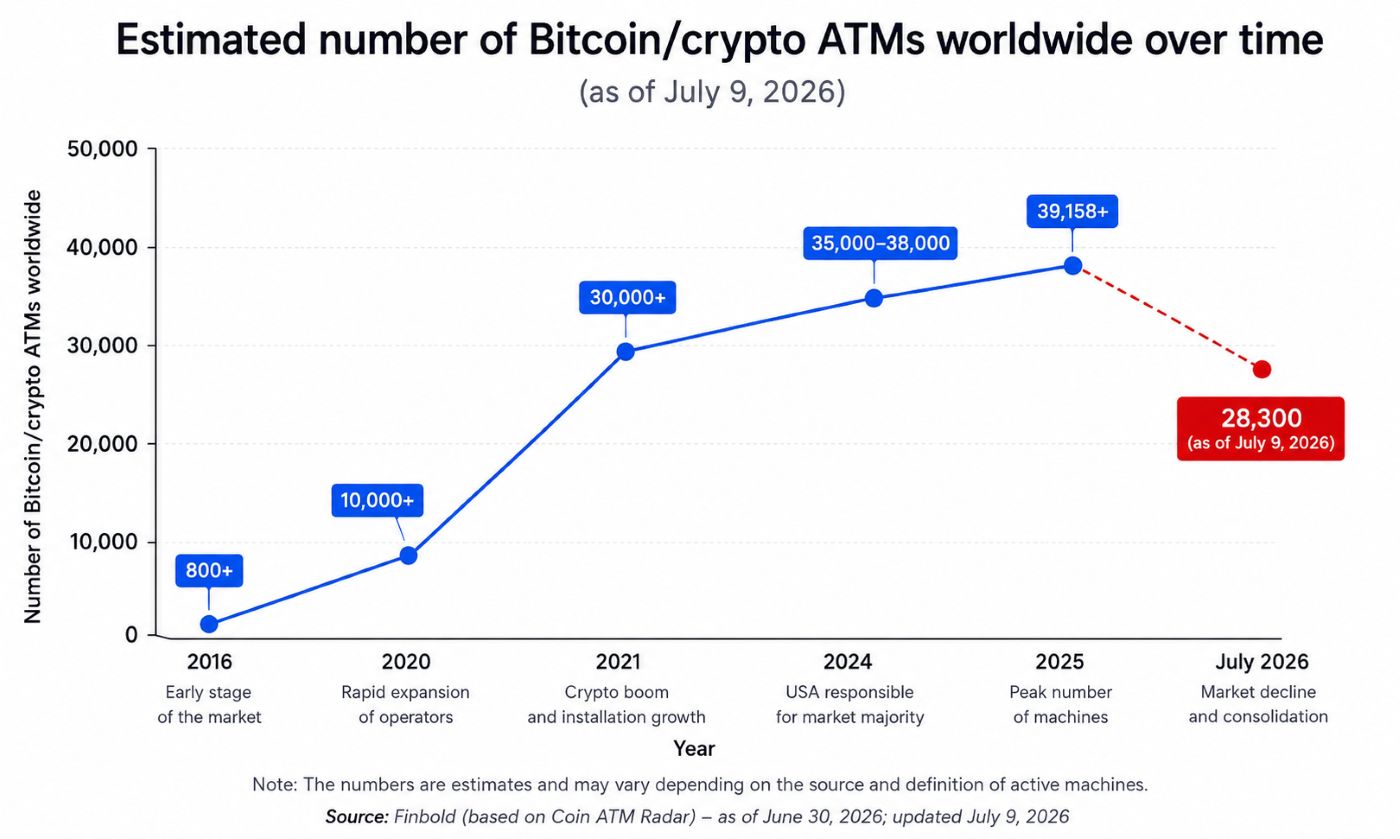
The global Bitcoin ATM network is heavily concentrated in North America. The United States has the largest number of machines, followed by Canada and Australia, as well as selected European countries such as Spain, Poland, Switzerland, Austria, Germany, and Romania.
The United States, Canada, and Australia Lead the Global Market
The United States remains the largest market. It has by far the most Bitcoin ATMs in the world, mainly because of the high volume of cash transactions and its extensive network of convenience stores, gas stations, and local service businesses.
Canada ranks second and is one of the longest-established Bitcoin ATM markets. One of the world's first widely known Bitcoin ATMs was launched in Vancouver in 2013. Australia is now the third-largest market and one of the most important outside North America.
Europe: Poland, Spain, and Several Strong Local Markets
Poland and Spain stand out in Europe, followed by Italy, Romania, Austria, Switzerland, Germany, the Czech Republic, and Slovakia. Poland is now one of Europe's largest markets by number of machines.
Switzerland has a smaller network than the leading countries, but it remains important because of the strong cryptocurrency ecosystem around Zug, Zurich, Geneva, Basel, and Lugano.
Asia, Latin America, and Smaller Markets
Outside Europe, Hong Kong, El Salvador, and New Zealand are also noteworthy. Hong Kong serves as a major Asian cryptocurrency hub, El Salvador is known for Bitcoin's prominent role in the country, and New Zealand has a relatively high number of locations for the size of its market.
The number of machines alone does not fully reflect accessibility. Transaction limits, machine availability, supported currencies, fees, and local regulations also matter.
Why Does the United States Have the Most Bitcoin ATMs?
The United States has the largest Bitcoin ATM network because of the size of its market, the large number of retail outlets, and the strong presence of operators. Machines are typically placed in convenience stores, gas stations, supermarkets, and local service businesses, where high foot traffic can be combined with cash handling.
The U.S. market is, however, subject to increasingly strict regulation. AML/KYC requirements, consumer protection pressure, and the number of scam-related cases are all increasing. The United States still dominates, but the number of machines can change quickly as some locations close and operators adapt their networks to new requirements.
Bitcoin ATMs in Switzerland: What You Need to Know
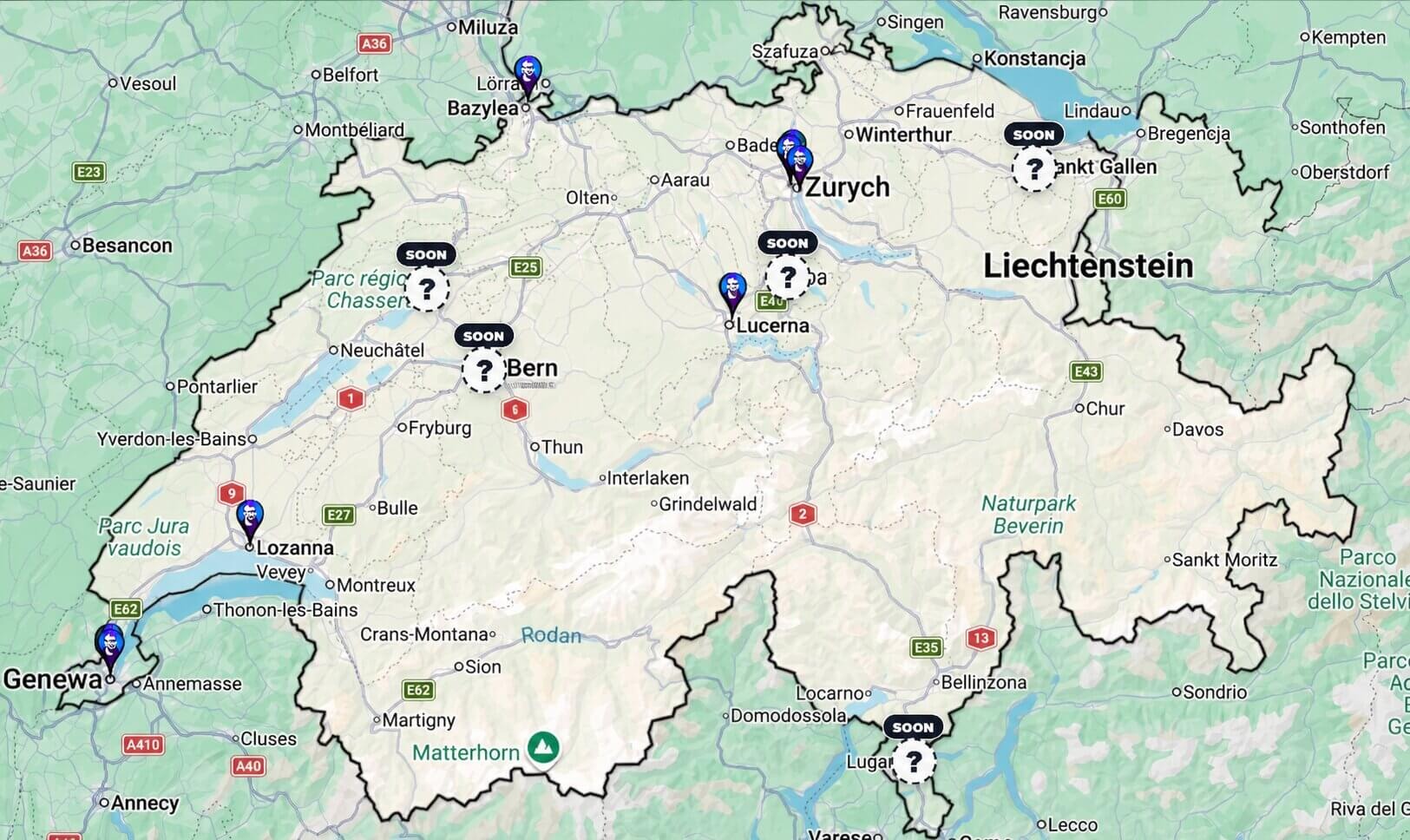
Switzerland cannot match the United States in terms of machine numbers, but it remains an important market in terms of service quality. For Polish-speaking residents of Switzerland, three factors matter most: access to nearby locations, regulatory compliance, and transaction costs in CHF.
Bitcoin ATMs in Switzerland are found mainly in larger cities and regions with a high level of financial or technological activity. Zurich, Geneva, Basel, Bern, Zug, and Lugano are particularly important.
What Is a Bitcoin ATM?
A Bitcoin ATM (BTC ATM) is a self-service kiosk that allows users to buy Bitcoin with cash or a payment card. Some machines also let users sell Bitcoin and withdraw cash, but this option is available only at two-way Bitcoin ATMs.
Although it resembles a traditional ATM, a Bitcoin ATM is not linked to a bank account. Instead of dispensing money from an account, it sends the purchased BTC directly to the user's cryptocurrency wallet or receives cryptocurrency when the user sells it. This makes it one of the easiest ways to buy and sell Bitcoin at a physical location.
How Has the Number of Bitcoin ATMs Changed Over Time?
Following rapid growth from 2016 to 2021, the Bitcoin ATM market entered a more mature phase. The number of machines continues to fluctuate from month to month, but it no longer follows the steady upward trend seen during the bull market. In 2026, a clear correction is visible: some machines have been shut down, relocated, or removed from tracking databases.
Summary
The Bitcoin ATM market in 2026 is smaller than earlier estimates suggested. Current data indicate around 28,300 machines worldwide, with the United States, Canada, and Australia clearly dominating, while Europe has several strong but smaller markets.
The number of Bitcoin ATMs changes frequently because operators close underperforming locations, install new machines, and adapt to regulatory requirements. Before using a particular machine, check its current status, available functions, fees, and limits on an up-to-date Bitcoin ATM map.
Frequently asked questions
The highest number of Bitcoin ATMs is found in the United States. The U.S. remains the clear leader thanks to the largest network of operators and the many locations in convenience stores, gas stations, and service businesses.
Europe's largest Bitcoin ATM networks are in Poland, Spain, Italy, Romania, Austria, Switzerland, and Germany, although the exact numbers change constantly.
No. Bitcoin ATMs operate only in selected countries. The largest networks are in North America, Australia, and parts of Europe, while many countries have very few machines or none at all because of local regulations.
No. Most machines allow users to buy Bitcoin with cash, but some also support card payments. The available payment methods depend on the operator and the specific location.
The easiest way is to use Bitcoin ATM maps, which show up-to-date locations, opening hours, supported cryptocurrencies, and the functions available at each machine. Check that the selected Bitcoin ATM is still operating before you visit.
Yes, but only at two-way machines. Some Bitcoin ATMs support cryptocurrency purchases only, so check the functions of the specific machine before visiting.
Operators regularly install new machines, close unprofitable locations, and update their networks. Market-tracking services may also report changes with a delay, so global statistics are continuously updated.
Yes. Bitcoin ATMs operate in Switzerland in accordance with local regulations. Operators must, however, comply with applicable anti-money laundering (AML) requirements, so user requirements may vary depending on the operator and the transaction amount.