Most Common Mistakes When Using a Bitcoin ATM in Switzerland – What to Avoid
Bitcoin ATMs let you buy and sell cryptocurrency for cash without using a traditional crypto exchange. The machines are relatively easy to use, but there are several important details to check during a transaction.
Choosing the wrong blockchain network, scanning the wrong address, overlooking the exchange rate, or trying to send the funds again can cause problems with the transaction.
Below, we cover the most common mistakes made when using a Bitcoin ATM in Switzerland and explain how to avoid them.
1. Choosing the wrong blockchain network
This is especially important for cryptocurrencies that can operate on several different networks.
USDT is a good example. Tether can be transferred over different blockchain networks, so it is not enough to know that your wallet supports USDT. The network selected at the Bitcoin ATM must match the network used by the address shown in your wallet.
Before scanning the QR code, check both the cryptocurrency and the selected network.
For more information about USDT, see our guide to buying USDT with cash in Switzerland.
2. Scanning a wallet address that belongs to someone else
When buying cryptocurrency at a Bitcoin ATM, you will be asked for the wallet address where the funds should be sent. The address is usually provided by scanning a QR code displayed in your wallet app.
Always use a wallet address you control.
Do not scan a QR code sent by a stranger via a messaging app, email, or phone simply because they claim it is required for an investment, a payment, or to unlock funds.
Once cryptocurrency has been sent, a blockchain transaction generally cannot be canceled like a card payment. That is why you should verify the recipient address before confirming the transaction.
3. Not checking the address before confirming a purchase
A QR code reduces the risk of manually entering a long address, but you still need to verify the address.
After scanning the code, check whether the Bitcoin ATM displays an address that matches the one in your wallet. It is a good idea to compare at least the beginning and end of the address.
If anything does not match, do not confirm the transaction. Go back to the previous step and reopen the correct address in your wallet app.
4. Confusing a wallet address with a withdrawal code
When using a Bitcoin ATM, you may encounter different QR codes, transaction numbers, and codes used to collect cash.
They do not serve the same purpose.
A wallet address identifies where the cryptocurrency should be sent. A withdrawal code, by contrast, may be used to collect cash once the sale process is complete.
Before scanning a code, check exactly what the Bitcoin ATM is asking for at that stage of the transaction.
5. Starting a transaction without a valid ID
Not needing an account with a crypto exchange or the operator's app does not mean identity verification is not required.
At the Bitcoin ATMs featured on our website, identity verification is required for every transaction. Bring a valid ID with you.
Your ID is scanned directly at the Bitcoin ATM as part of the KYC process.
If you want to see how the full process works in advance, read our guide to KYC verification at Bitcoin ATMs in Switzerland.
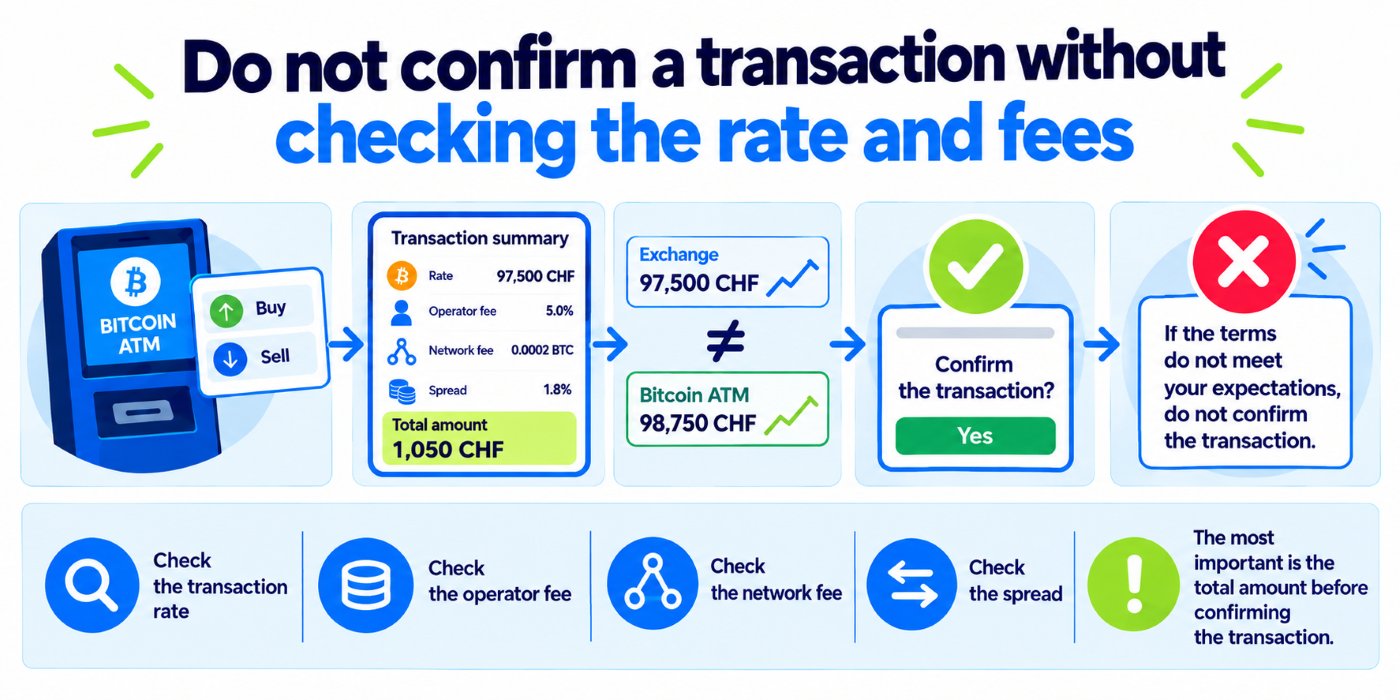
6. Confirming a transaction without checking the exchange rate and fees
Before confirming a purchase or sale, always review the information displayed on the Bitcoin ATM screen.
The exchange rate used by a Bitcoin ATM may differ from the price shown on a cryptocurrency exchange. The final cost can be affected by the transaction exchange rate, operator fee, spread, and network fee.
The most important information is the amount shown before you give final confirmation.
If the terms do not suit you, do not confirm the transaction.
We explain the differences between the operator fee, spread, and network fee in our article Bitcoin ATM Fees in Switzerland – Exchange Rates and Costs.
7. Sending the cryptocurrency again because the first transaction is still pending
This is especially important when selling cryptocurrency.
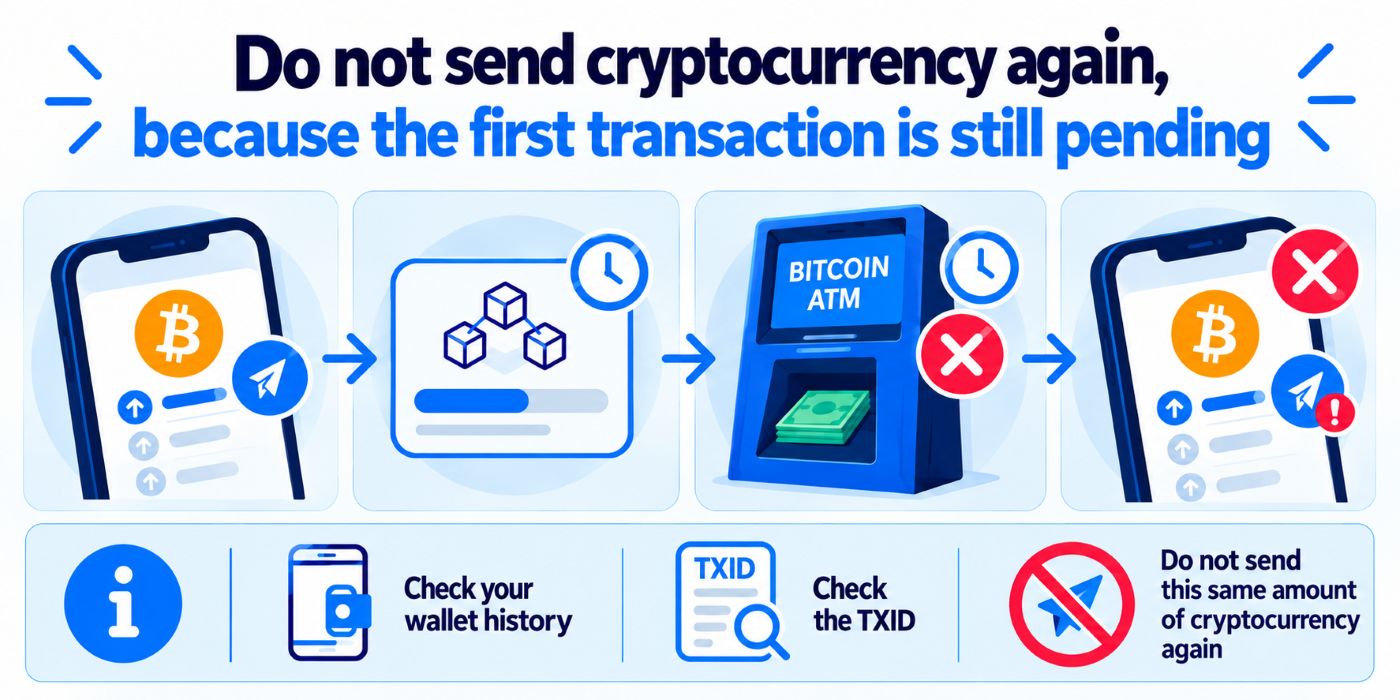
After sending funds to the address provided by the Bitcoin ATM, the transaction may take some time to appear on the blockchain and receive the required confirmations.
Not being able to withdraw cash immediately does not necessarily mean the cryptocurrency was not sent.
Do not send the same amount again just because the first transaction is still waiting for confirmation.
First, check your wallet's transaction history and the TXID, which is the blockchain transaction identifier.
8. Trying to collect cash before the required transaction steps are complete
When selling cryptocurrency, cash may not be available for collection immediately after you send the funds.
The transaction must first be recorded on the blockchain, and the ATM or the operator's system may wait for a specified number of confirmations.
If a withdrawal code has already been generated but the Bitcoin ATM does not yet allow you to collect cash, first check whether the cryptocurrency was sent, whether the transaction has a TXID, and its current status.
Do not start another transaction until you have checked the status of the previous one.
9. Not checking the location and opening hours
Not all Bitcoin ATMs are accessible 24/7.
Some Bitcoin ATMs are located inside kiosks or shops and can only be used during that location's opening hours.
Before you travel to the ATM, check its exact address and current opening hours. This is especially important if you plan to sell cryptocurrency and collect cash late in the evening or on a Sunday.
You can find current locations on our map of Bitcoin ATMs in Switzerland.
If you are using a Bitcoin ATM in Zurich, also see our guide to Bitcoin ATMs in Zurich.
10. Making a transaction under pressure from someone else
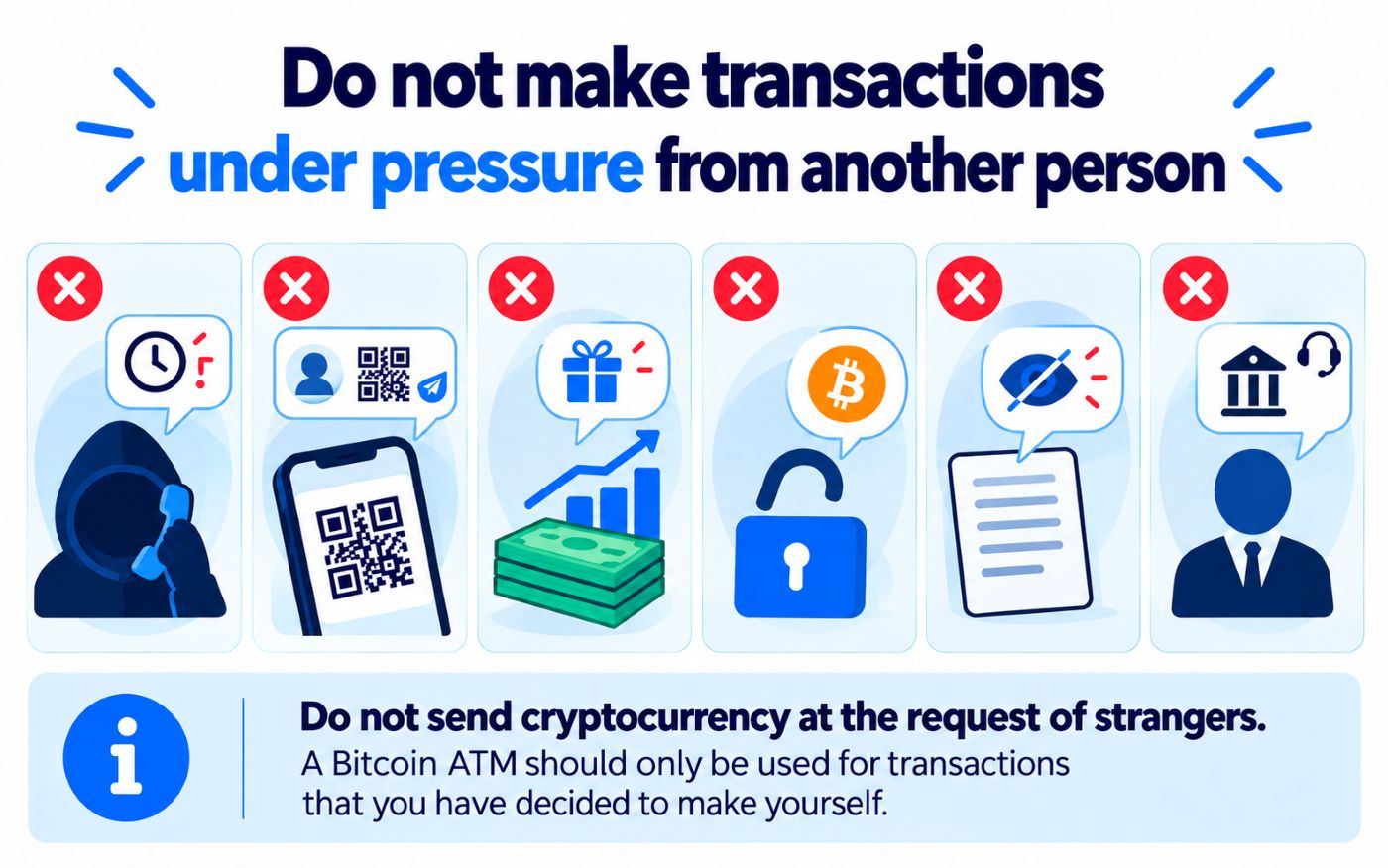
A major warning sign is when a stranger tells you by phone or messaging app to go to a Bitcoin ATM and send cryptocurrency to an address they provide.
Be especially cautious if someone:
- pressures you to complete the transaction quickly
- sends you a QR code to scan
- promises a guaranteed profit or claims the profit is certain
- claims you must pay in cryptocurrency to unlock funds
- asks you to conceal the purpose of the transaction
- claims to be from a bank, government office, investment company, or technical support and instructs you to send cryptocurrency
If you do not understand the purpose of the transaction or do not know who controls the wallet address, do not confirm it.
Use a Bitcoin ATM only for transactions you have chosen to make yourself and when you know who the recipient is.
What should you check before using a Bitcoin ATM?
Before starting a transaction, prepare your own cryptocurrency wallet and a valid ID. Also check the ATM's exact location, opening hours, and the type of transaction you want to make.
When buying, make sure the wallet address and network are correct. Before giving final confirmation, review the exchange rate and fees shown on the screen.
When selling, keep the TXID and the code needed to collect the cash later. If the transaction is awaiting confirmation, check its status before starting another transaction.
What should you do if you make a mistake during a transaction?
The next steps depend on the type of problem.
If you have not confirmed the transaction yet, stop and check the details again.
If the cryptocurrency has already been sent, save the TXID, wallet address, date, approximate time, and Bitcoin ATM location. You may need this information when contacting the operator's support team.
Do not make another transaction just to “fix” the first one before checking its status.
Summary
Most problems when using a Bitcoin ATM can be avoided by carefully checking the key transaction details before you confirm it.
The most important thing is to make sure you selected the correct cryptocurrency and network, the scanned address belongs to your wallet, and you understand the exchange rate and fees. When selling, keep the TXID and wait for the required confirmations before trying to collect cash.
Also bring a valid ID. At the Bitcoin ATMs featured on our website, KYC identity verification is required for every transaction.
Do not make a transaction based on instructions from a stranger, and never share your wallet's private key or recovery phrase with anyone.
Information about supported cryptocurrencies, networks and Bitcoin ATM availability may change. Before starting a transaction, always check the current information shown on the screen of your chosen Bitcoin ATM.
Frequently asked questions
Common mistakes include choosing the wrong network, scanning the wrong wallet address, not checking the exchange rate and fees, and trying to collect cash too early while the transaction is still waiting for confirmation.
Once a transaction is recorded on the blockchain, it generally cannot be reversed in the same way as a bank transfer or card payment can be canceled. That is why you should carefully check the address, network, and amount before sending funds.
Yes. At the Bitcoin ATMs featured on our website, identity verification with a valid ID is required for every transaction.
First, check whether the cryptocurrency was actually sent and whether the transaction has a TXID. Then check its status and the number of confirmations. Do not send the same amount again just because the cash is not yet available for collection.
Do not scan an unfamiliar QR code simply because someone tells you to buy cryptocurrency and send it to a specified address. When buying, use an address from your own wallet that you control.
Yes. Before confirming, always check the exchange rate, the cryptocurrency amount, and the fees shown on the Bitcoin ATM screen. This lets you review the transaction terms before completing it.