What is Ethereum, and how can you buy it in Switzerland?
Ethereum is one of the most important technologies in the cryptocurrency sector. It supports not only the transfer of digital assets, but also smart contracts, decentralized applications, and financial services that operate without traditional intermediaries.
This guide explains what Ethereum is, how its blockchain works, and how it differs from Bitcoin. It also covers how to buy Ethereum in Switzerland with cash, by bank transfer, or through a Swiss financial institution.
Key Facts About Ethereum
Ethereum is a public, open blockchain network launched in 2015. Its main purpose is to run programs known as smart contracts.
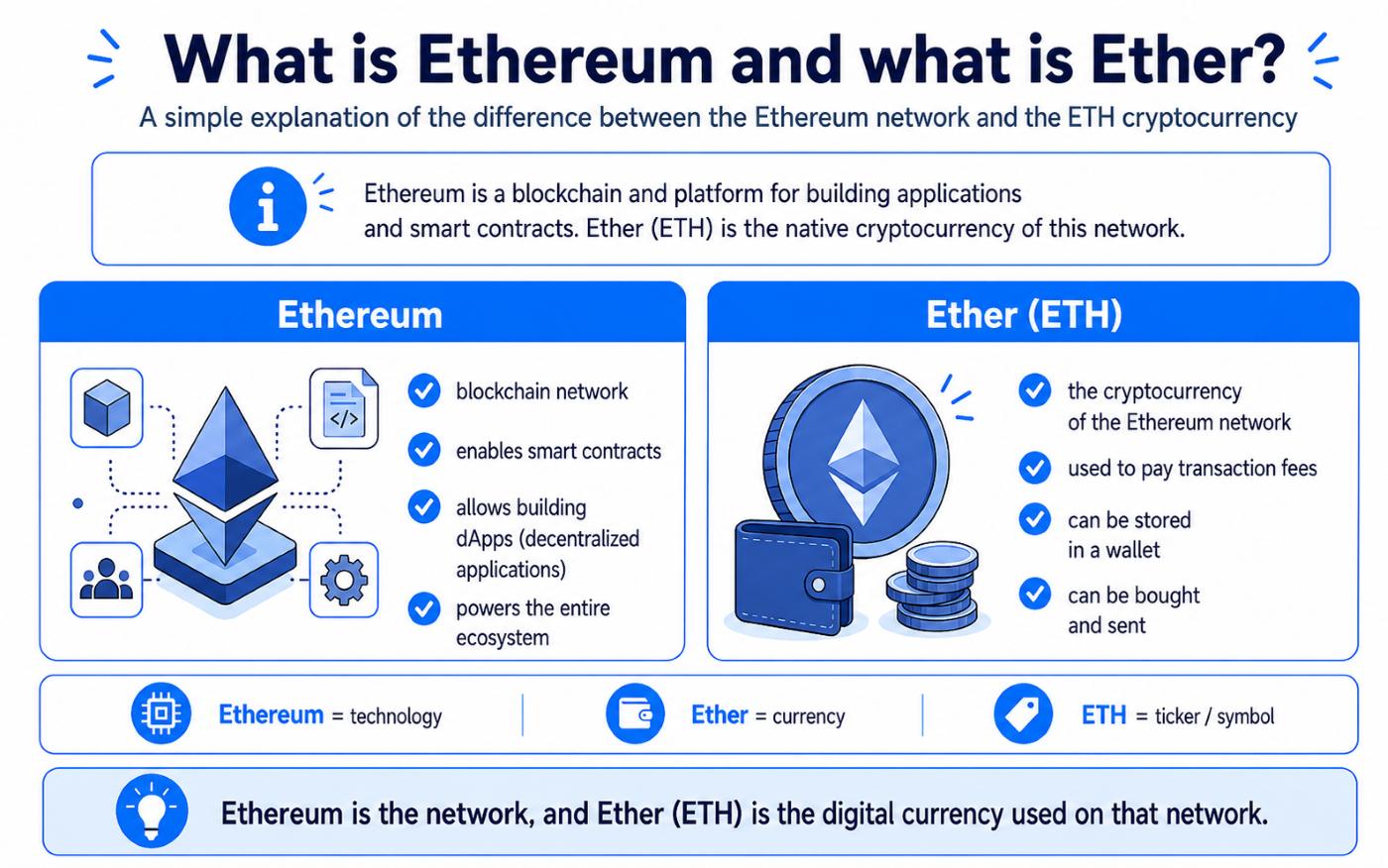
The native cryptocurrency of the Ethereum network is Ether, represented by the symbol ETH. In practice, the terms “Ethereum” and “Ether” are often used interchangeably, although they technically refer to two different things:
- Ethereum is a blockchain network and technology platform
- Ether, or ETH, is the cryptocurrency used on the network
- ETH is used to pay transaction fees and power applications
- Ethereum uses the Proof of Stake mechanism
- you do not need to buy one whole ETH, as the cryptocurrency is divisible
- ETH can be stored in your own cryptocurrency wallet
Ethereum was created to expand the capabilities of blockchain technology beyond simply transferring digital money. The network officially went live on July 30, 2015.
What is Ethereum, and what is Ether?
Ethereum is a decentralized computer network in which information about transactions and application activity is recorded on the blockchain. Independent participants around the world store copies of the network’s history.
One of Ethereum’s most important features is smart contracts. These are programs stored on the blockchain that automatically perform specified actions when predefined conditions are met. For example, a smart contract can transfer a token, register digital ownership, or manage a loan without a traditional bank.
Ether, meanwhile, has a practical role. It is used, among other things, for:
- transferring funds between wallets
- paying network fees
- using decentralized applications
- creating and exchanging tokens
- securing the network through staking
The cost of performing an operation on Ethereum is known as a gas fee. The amount depends on factors including current network congestion and the complexity of the operation.
How does Ethereum work?
Ethereum runs on a blockchain, an ordered ledger of data. Information about transactions is grouped into blocks, verified by network participants, and added to the chain.
Once a transaction has been confirmed, it usually cannot be reversed. Therefore, before sending ETH, you should carefully check the wallet address, the selected network, and the amount.
Ethereum also supports decentralized applications, known as dApps. They can operate without a single central server or company controlling all the data.
Ethereum is used to develop, among other things:
- decentralized cryptocurrency exchanges
- lending and savings platforms
- tokens and stablecoins
- blockchain-based games
- digital identity systems
- NFT collections
- asset tokenization solutions
Each action performed through an application may require a fee paid in ETH.
A Brief History of Ethereum
The idea of creating Ethereum was proposed by Vitalik Buterin in 2013. Other co-founders, including Gavin Wood and Joseph Lubin, later joined the project.
The Ethereum network was launched on July 30, 2015, with the creation of the first block. Its goal was to create a blockchain on which developers could build their own applications and smart contracts.
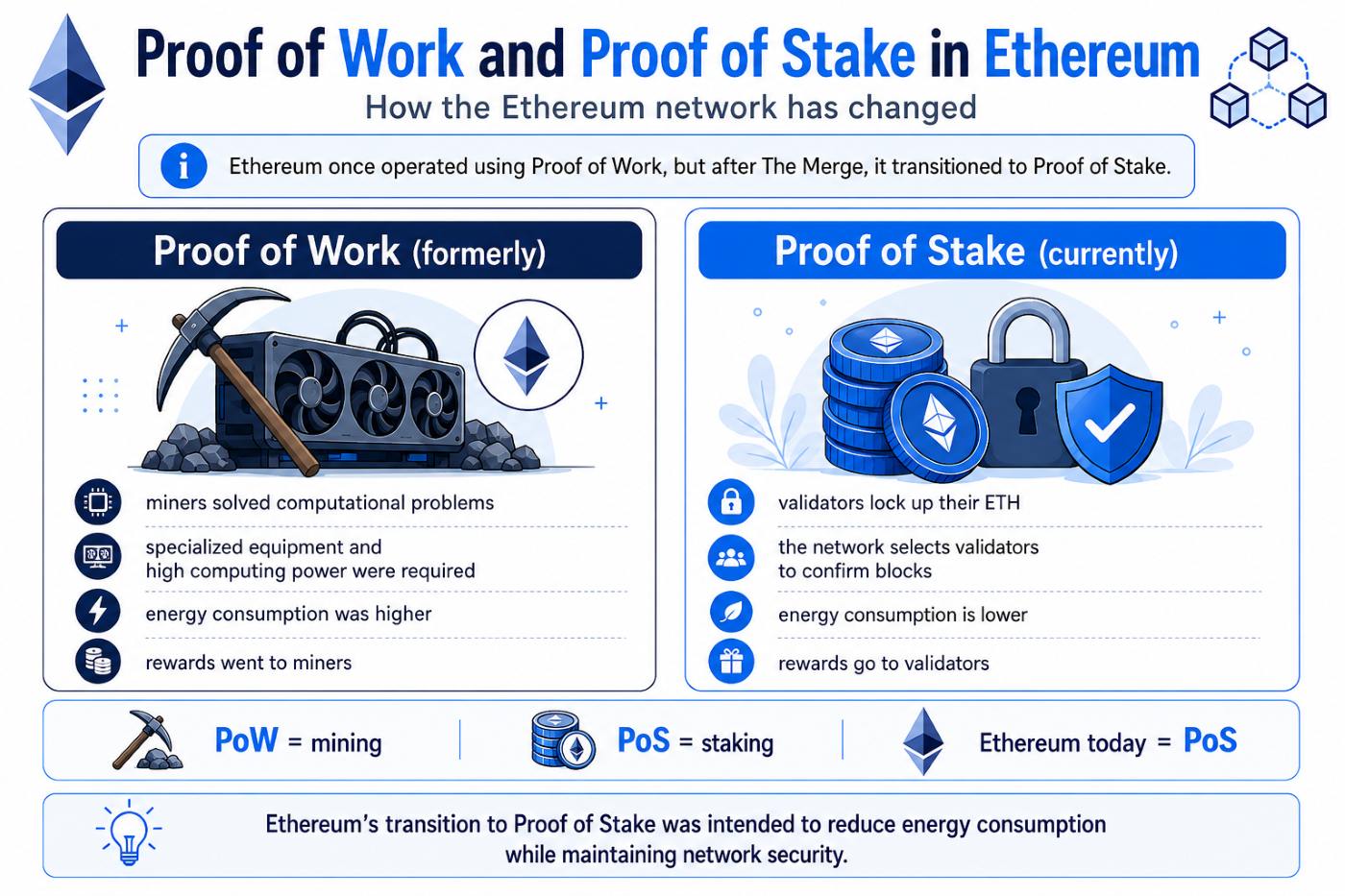
Initially, Ethereum used a Proof of Work mechanism, similar to the system used by Bitcoin. In September 2022, however, the network switched to Proof of Stake as part of an update called The Merge.
What is Ethereum 2.0?
Ethereum 2.0 was a widely used term for a series of upgrades designed to improve the network’s performance, security, and scalability.
However, a separate “Ethereum 2.0” cryptocurrency was not created. ETH held prior to the upgrade remained the same asset and did not require a mandatory swap for a new token.
Today, the term “Ethereum 2.0” is used less frequently. Instead, people refer to Ethereum’s ongoing upgrades and development roadmap. One of the most significant changes was the transition of the existing network to Proof of Stake during The Merge.
Proof of Work and Proof of Stake in Ethereum
Under Proof of Work, miners use computing power to compete for the right to add a new block to the blockchain.
Proof of Stake, on the other hand, relies on validators who lock up ETH as collateral to ensure the network operates properly. Validators verify transactions and can participate in creating new blocks.
Dishonest behaviour may result in the loss of some of the staked funds. This gives participants a financial incentive to follow the network’s rules. Running a validator independently currently requires staking 32 ETH, although selected staking services may also accept smaller amounts.
How can you buy Ethereum in Switzerland?
There are several ways to buy Ethereum in Switzerland:
Buying ETH at a Bitcoin ATM
At selected Bitcoin ATMs, you can buy Ethereum with cash. Simply scan the QR code from your wallet, insert banknotes, and confirm the transaction. Before buying, check the exchange rate, fees, limits, and supported currencies.
Buying ETH on a Cryptocurrency Exchange
Online exchanges allow you to buy ETH with a payment card or by bank transfer. They usually require you to create an account and verify your identity. After the purchase, you can leave the ETH on the platform or transfer it to your own wallet.
Buying ETH Through a Bank or Broker
Some Swiss banks and investment platforms allow customers to buy Ethereum directly from their accounts. However, check whether you receive actual ETH that can be withdrawn or only an investment product linked to its price.
How Do You Buy Ethereum with Cash at a Bitcoin ATM?
The purchasing process may vary depending on the machine, but it usually follows these steps:
- Prepare a wallet that supports Ethereum and open the screen showing your ETH receiving address
- Select Ethereum on the Bitcoin ATM screen
- Scan your wallet’s QR code and verify the address
- Insert banknotes into the machine
- Check the exchange rate, fees, and transaction summary
- Confirm the purchase and keep the receipt until the ETH arrives
The cryptocurrency will be sent to the wallet address provided during the transaction. The waiting time depends on how the machine processes the transaction, network congestion, and the number of required confirmations.
Never scan a QR code sent by someone you don't know. It may contain the wallet address of a scammer.
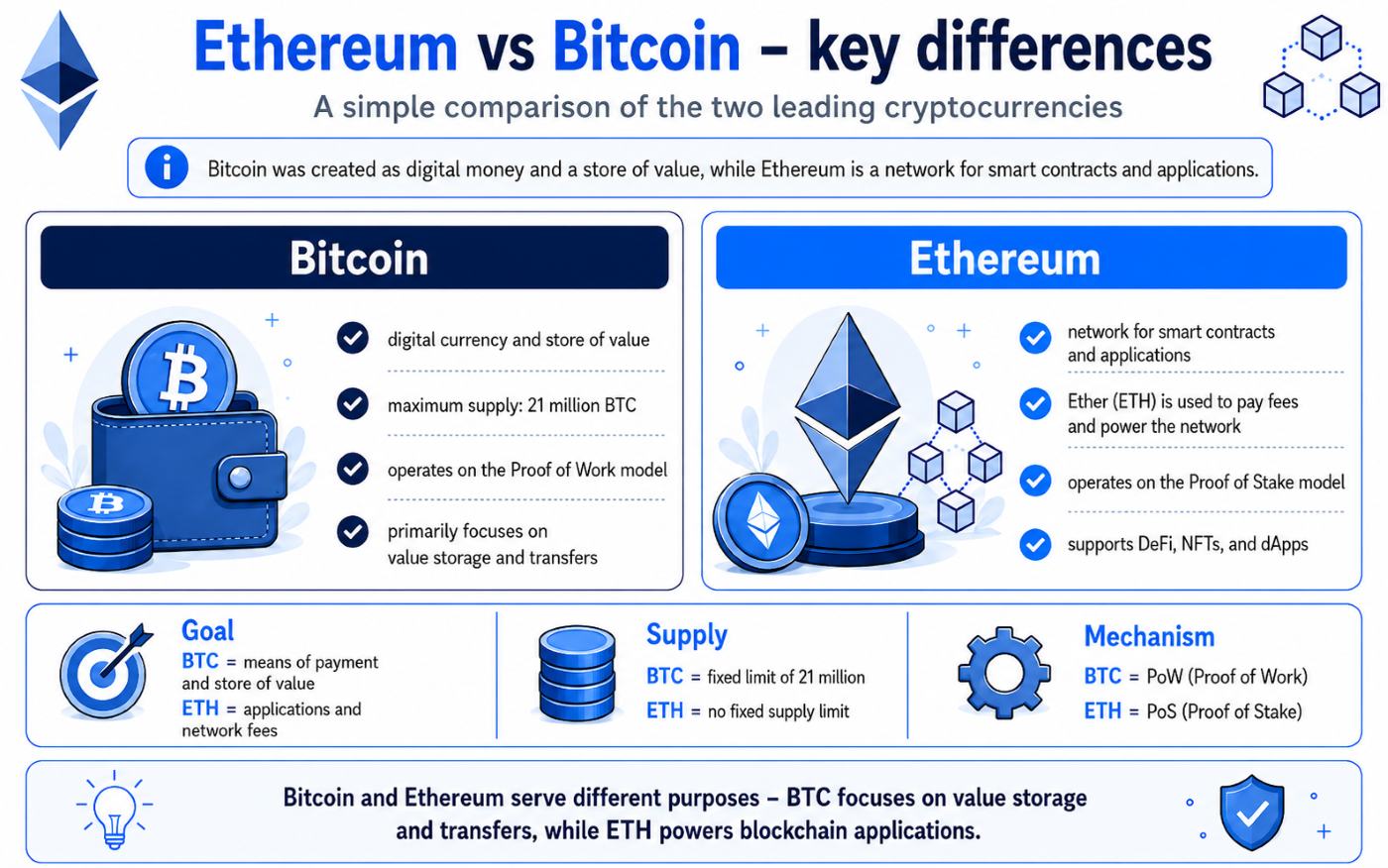
Ethereum vs. Bitcoin – Key Differences
Bitcoin and Ethereum are both decentralized blockchain networks, but they were designed for different primary purposes.
Bitcoin is primarily designed for transferring and storing digital value. It has a maximum supply of 21 million BTC and uses Proof of Work.
Ethereum is a platform for running smart contracts and applications. ETH serves both as a cryptocurrency and as the asset used to pay network fees.
This does not mean that one of these cryptocurrencies is always better than the other. Bitcoin and Ethereum serve different purposes, and their prices may respond to different technological and market developments.
What affects the price of Ethereum?
The price of ETH is determined by the market based on supply and demand. It can change very quickly.
Factors that influence Ethereum’s value include:
- investor interest
- the use of decentralized applications
- number of transactions on the network
- Ethereum’s development and network upgrades
- the popularity of staking
- conditions in global financial markets
An increase in the number of users does not guarantee a rise in the price of ETH. Cryptocurrencies remain highly volatile assets.
Is Ethereum secure?
The Ethereum network itself is secured by a large number of independent participants and its Proof of Stake mechanism. However, this does not mean that every investment, application, or token operating on Ethereum is secure.
The most common risks include:
- losing the recovery phrase
- sending ETH to the wrong address
- fake wallets and websites
- malicious smart contracts
- an exchange account being compromised
- investment scams
- sudden price changes
FINMA notes that cryptoassets may be exposed to significant price volatility, cyber risks, and additional risks associated with unregulated service providers.
Do You Have to Declare Ethereum for Tax Purposes in Switzerland?
Owning ETH may affect your Swiss tax return. Cryptocurrencies should be declared in accordance with the taxpayer’s circumstances and the rules applicable in their canton.
The Swiss Federal Tax Administration publishes information on cryptocurrency taxation and lists of values used for tax purposes. Anyone earning income from staking, regular trading, or professional activity should carefully check how it is classified.
Is Ethereum Worth Buying?
Ethereum is a versatile blockchain platform used by financial applications, tokens, stablecoins, and other digital services. At the same time, ETH remains a high-risk asset whose price can rise rapidly or fall sharply.
Before buying, consider:
- how much you can afford to allocate to a high-risk asset
- where you will store the ETH
- the fees charged for the purchase
- whether you can withdraw the ETH to your own wallet
- the security measures offered by the selected service
- whether you are prepared for substantial price volatility
Summary
Ethereum is a blockchain network that supports smart contracts and decentralized applications, while ETH is its native cryptocurrency. In Switzerland, Ethereum can be bought at Bitcoin ATMs, on cryptocurrency exchanges, or through selected banks and investment platforms.
Before buying, compare exchange rates, fees, and available payment methods, and prepare a secure wallet that supports ETH. Remember that Ethereum’s price can fluctuate substantially, so your purchase should reflect your budget and the level of risk you are willing to accept.
Frequently asked questions
Ethereum is a decentralized blockchain network that supports smart contracts and applications. Its native cryptocurrency is Ether, represented by the symbol ETH.
No. Ethereum is the blockchain network, while Ether is the cryptocurrency used to pay for transactions and power applications on that network.
Ethereum can be bought at selected Bitcoin ATMs, on cryptocurrency exchanges, through some banks, or via investment platforms. The available payment methods depend on the chosen provider.
Yes, provided the machine supports ETH. Prepare an Ethereum wallet, scan its QR code, insert banknotes, and confirm the transaction.
No. ETH is divisible, so you can buy only a small fraction to suit your budget.
You need a wallet that supports the Ethereum network. This can be a mobile app, a browser wallet, or a hardware wallet.
Bitcoin was created primarily as a digital asset for storing and transferring value. Ethereum also supports smart contracts, tokens, and decentralized applications.
Buying Ethereum can be safe if you use a trusted device or platform and carefully verify the wallet address. However, you should remain aware of scams, incorrect transfers, and substantial ETH price volatility.